

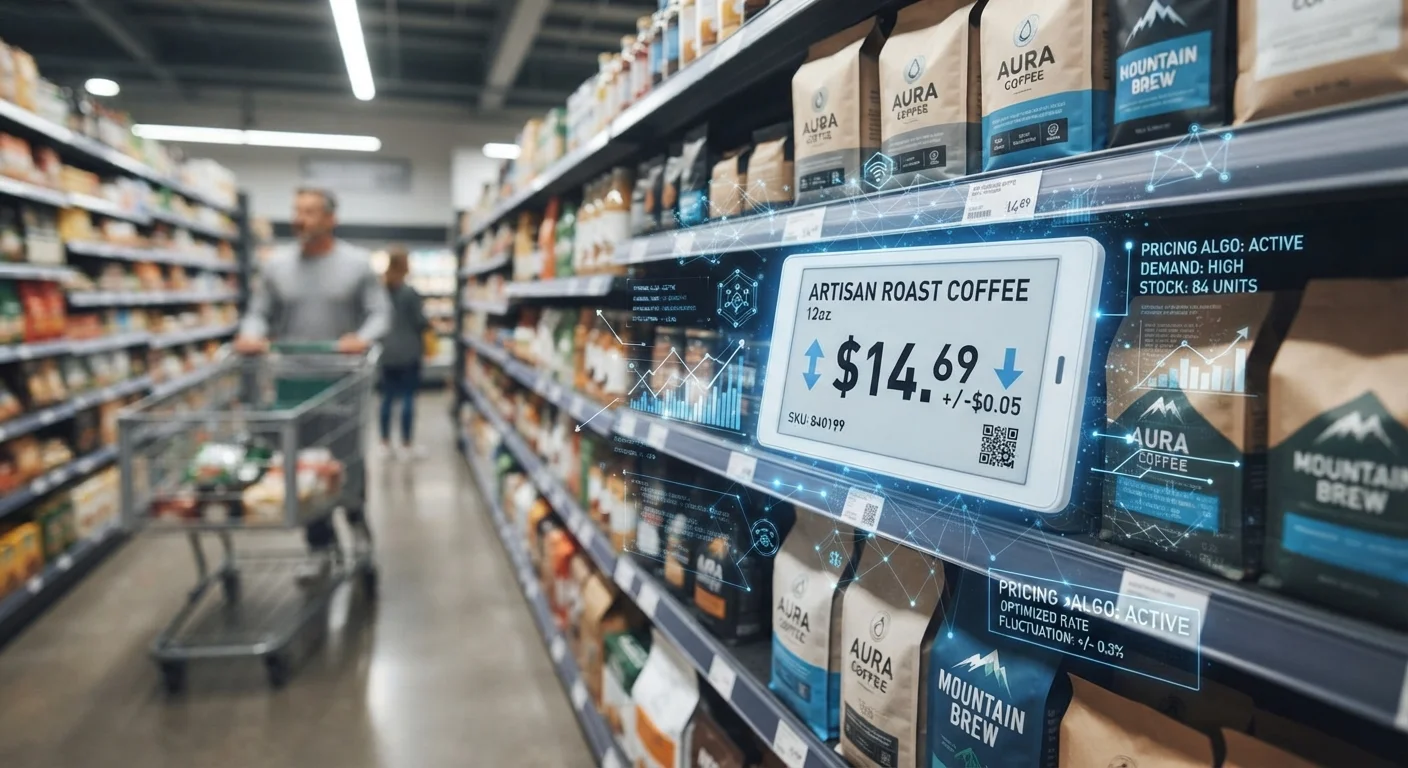
How Dynamic Pricing Actually Works
At its core, dynamic pricing relies on software that monitors a set of variables and recalculates price in real time. The inputs vary by retailer, but the most common signals include:
- Demand signals: High search volume or fast-moving inventory triggers price increases. Low demand can push prices down to stimulate sales.
- Competitor pricing: Retailers scrape competitor websites continuously and adjust their own prices to stay within a target range.
- Time and day: Prices on some platforms fluctuate based on hour of day or day of week, reflecting when shoppers are most likely to convert.
- Inventory levels: As stock drops, prices often rise. When a warehouse is overstocked, prices may quietly fall.
This is fundamentally different from how traditional retail pricing worked. A sticker price used to be set seasonally or based on a cost-plus margin formula. Today, a single product listing on a large e-commerce platform may see dozens of price changes in a 24-hour period.
~2.5M
Daily price changes on a major retail platform
Industry analyses have estimated that large e-commerce platforms can process millions of automated price changes per day across their full product catalog.
36%
Shoppers who noticed price changes mid-session
Consumer surveys on retail pricing behavior have found a significant share of online shoppers report observing price shifts within the same browsing session.
3–5 years
Timeline for widespread ESL adoption in US grocery
Retail technology analysts project electronic shelf labels will see broad US grocery rollout within the next several years as hardware costs decline.
Personalized Pricing: When the Price Is About You
A related but distinct phenomenon is personalized pricing — where the price shown to you is influenced by data tied to your identity or behavior. This is worth understanding separately from broad algorithmic price swings.
Retailers and platforms may factor in signals like your device type, your account's purchase history, your geographic location, or even whether you've abandoned a cart recently. Some platforms have been documented showing different prices to users on different devices.
This intersects directly with what retailers know about you before you walk in. The behavioral data collected during your browsing sessions doesn't just serve up targeted ads — it can feed into pricing logic as well.
Try Checking Prices in Incognito Mode
Opening a private or incognito browser window clears cookies and prevents your past session data from influencing what the retailer's system shows you. It's not a guaranteed workaround — some platforms use IP-level data as well — but it's a low-effort first step to checking whether the price you're seeing is personalized.
Dynamic Pricing vs. Predictable Markdown Cycles
It's important not to conflate dynamic pricing with the older system of planned retail markdowns. Both exist simultaneously, and understanding the difference changes how you should approach shopping decisions.
Traditional markdown cycles follow a relatively predictable calendar — end-of-season clearance, category-specific promotions, and holiday-driven sales windows. The retail markdown calendar follows patterns you can learn and anticipate. Dynamic pricing, by contrast, doesn't follow a calendar — it follows data.
There's also the important nuance that a dynamically adjusted price is not the same as a genuine discount. The difference between a sale price and an actual discount matters here: a price drop driven by an algorithm may simply reflect a return to normal from an artificial peak, not a real reduction in value.
Similarly, understanding anchor pricing and the illusion of a deal helps you recognize when a "lower" displayed price is being framed against a reference point that may not reflect true market value.
What Shoppers Can Do With This Knowledge
Dynamic pricing isn't going away — if anything, it's expanding into physical stores as electronic shelf label technology becomes more affordable. But understanding the mechanics shifts some power back to shoppers.
- Use price-tracking tools: Browser extensions that log historical pricing data on major platforms let you see whether a price is genuinely low or temporarily inflated.
- Try private browsing: Shopping in incognito or private mode prevents some behavioral signals from reaching the retailer's pricing engine during your session.
- Compare across devices and sessions: Checking a price on your phone and your laptop, or at different times of day, can surface variations you'd otherwise miss.
- Separate urgency from reality: A climbing price counter or low-stock warning may reflect genuine demand — or it may be a designed prompt. Apply the same skepticism you'd use toward any retail pricing myth.
For a broader framework on evaluating products before you commit, the product research hub offers structured guidance on how to assess value independent of what a price tag is telling you at any given moment.
Frequently Asked Questions
Yes, dynamic pricing is generally legal in the US. Retailers have broad discretion to set their own prices, provided they don't engage in practices like price gouging during declared emergencies, which is regulated at the state level. There are no federal laws that prohibit algorithmic price changes.
It can. Some retailers use behavioral data — including past searches, cart abandonment, and device type — to personalize offers or prioritize certain price points for certain users. This is distinct from true dynamic pricing but often operates alongside it. Shopping in a private or incognito browser window may show you different prices.
Increasingly, yes. Electronic shelf labels (ESLs) allow brick-and-mortar stores to update price tags remotely without manually replacing paper labels. Grocery and big-box retailers in particular are expanding use of this technology, though it remains less common than online dynamic pricing.
Browser extensions and third-party tools that track historical price data on major retail platforms can show you a price history chart. This lets you gauge whether a current price is actually lower than usual or has simply been reset after a temporary spike.
No. A traditional sale or markdown is a planned, scheduled reduction — often tied to a seasonal cycle or inventory clearance. Dynamic pricing is continuous and algorithm-driven, with no fixed schedule. The two systems can coexist: a base price may be dynamically adjusted while a promotional discount sits on top of it.
Yes. Prices can drop as well as rise. Shopping during off-peak hours, waiting out a demand surge, or checking prices at different times can sometimes yield lower prices than a retailer's standard rate. The key is understanding that no single price is necessarily "the" price.
The content on this site is for informational purposes only and is not a substitute for professional advice. Always consult a qualified professional for guidance specific to your situation.