

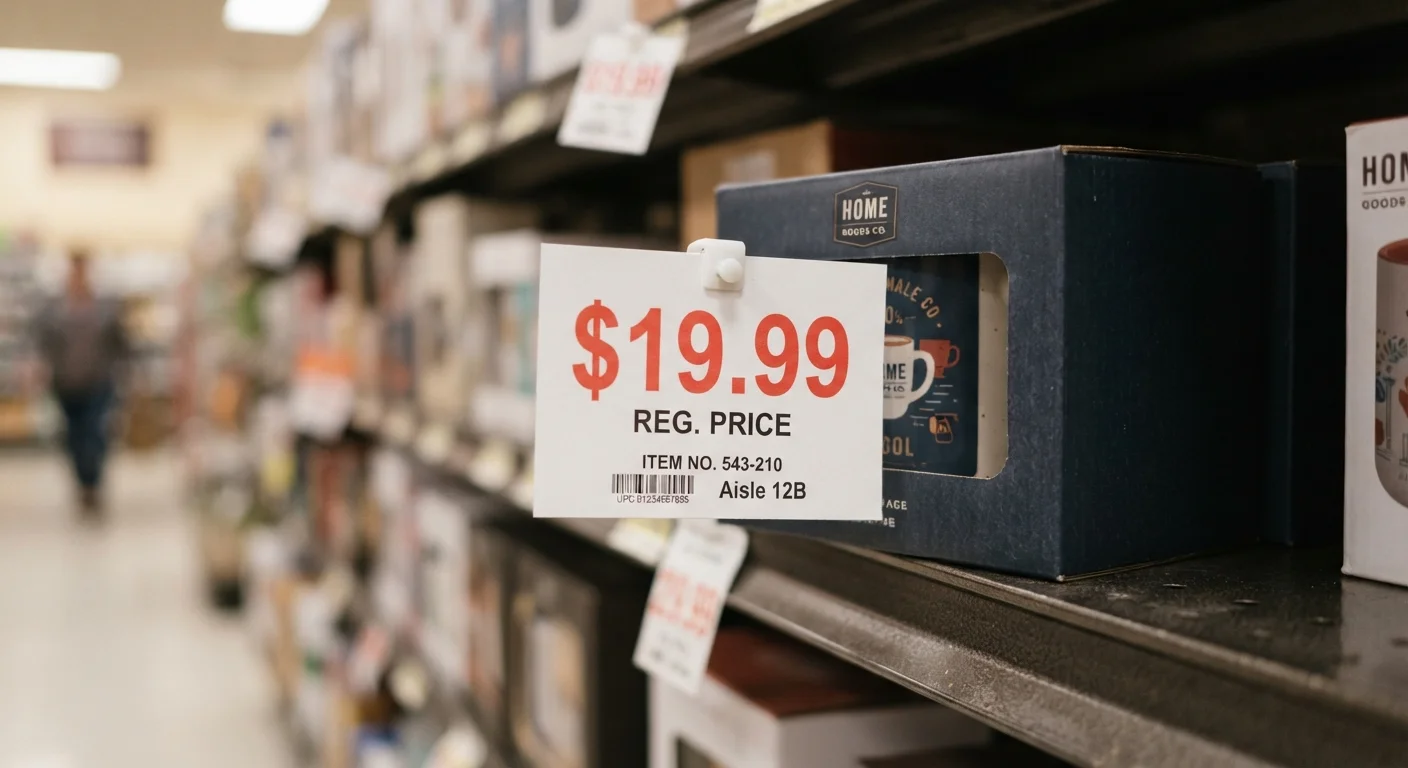
The Psychology Behind the Penny Gap
Walk through any grocery store, electronics retailer, or e-commerce checkout page and you'll notice the same pattern: prices that stop just short of a whole dollar. $4.99. $29.99. $199.99. The consistency isn't a coincidence — it's a deliberate application of behavioral psychology known as charm pricing or just-below pricing.
The core mechanism is called left-digit anchoring. When the human brain reads a number, it processes digits from left to right and gives the first digit outsized weight. That means $19.99 gets mentally filed closer to $19 than to $20, even though the actual difference is a single cent. The result is a perceived value gap that's far larger than the arithmetic warrants.
This isn't a fringe theory. Academic research in consumer psychology — including work published in the Journal of Consumer Research — has documented the left-digit effect across multiple shopping contexts. Retailers have built pricing systems around it for decades.
“Consumers don't calculate prices — they evaluate them. The leftmost digit does most of the work, which is why a one-cent difference can shift the psychological category of a price entirely.”
— Richard Thaler, Nobel Prize-winning economist and author of Nudge; widely cited in behavioral economics literature on consumer pricing
How Retailers Layer This Tactic
Charm pricing rarely operates alone. Retailers typically combine it with other perception-shaping strategies to reinforce the sense of value. Understanding these layers is the first step toward seeing through them.
- Anchor pricing: Displaying a higher "original" price next to the charm price makes the .99 figure look like a deal even when the markdown is minimal. For a deeper look at that tactic, see how anchor pricing shapes value perception.
- Price tag design: The color, font size, and placement of digits on a shelf label are often engineered to emphasize certain numbers. Retailers sometimes print the cents in a smaller font, further de-emphasizing the full price. Our guide on hidden codes in retail price tags covers more of these signals.
- Category norms: Once charm pricing becomes standard in a category — say, consumer electronics — shoppers begin to expect it, and a round-number price can actually feel more expensive by comparison.
Round Up Before You Decide
When you see a .99 price, mentally round it to the next dollar before judging whether it fits your budget. This simple habit neutralizes left-digit anchoring and gives you a cleaner basis for comparison. It takes about one second and requires no tools.
It's also worth noting what charm pricing is not: it is not a discount. A $19.99 price tag may carry full retail margin. The .99 is a presentation choice, not evidence of savings. That distinction matters when evaluating whether a purchase represents genuine value. Sale language can be equally misleading — the framing of a price and its actual cost to you are separate things.
What Round-Number Prices Signal Instead
Not every price ends in .99, and the exceptions are informative. Brands that charge $20, $50, or $200 — clean, round numbers — are often making a deliberate counter-statement. In premium or luxury segments, round prices can project confidence and transparency: the brand isn't playing perceptual games, and the price reflects that positioning.
Some direct-to-consumer brands and subscription services have leaned into round pricing explicitly as a trust signal. The logic is that shoppers who notice and appreciate the absence of charm pricing may perceive the brand as more straightforward.
This doesn't mean round prices are inherently fairer or that .99 prices are inherently manipulative — but understanding the signal each sends helps you evaluate what a retailer is trying to communicate beyond the product itself. For a broader look at separating price from actual value, see the real difference between price and value.
Round Prices Aren't Automatically Better
A $20.00 price tag doesn't mean a product is higher quality or more fairly priced than one at $19.99 — it's a different marketing signal, not a guarantee of value. Evaluate any price against what you're actually getting, not just how the number is formatted. The format tells you something about the retailer's positioning strategy, not the product's worth.
Practical Ways to Recalibrate Your Perception
Knowing about charm pricing is useful only if it changes how you engage with price tags. A few straightforward habits can help:
- Round up mentally. Before deciding whether a price is acceptable, round it to the nearest dollar. This counteracts left-digit anchoring and gives you a more accurate gut check.
- Use unit pricing. When comparing products — especially packaged goods — calculate the cost per unit (per ounce, per sheet, per serving). Unit pricing strips away perceptual framing and reveals actual cost. Most shoppers overlook unit price math, but it's one of the clearest tools available at the shelf.
- Set a budget before browsing. Charm pricing is more effective when you're deciding in the moment. Going in with a firm category budget reduces the influence of framing effects.
- Question the reference price. If a .99 price appears alongside a crossed-out higher price, ask whether that original price was ever genuinely charged — or whether it exists mainly to make the current price look attractive.
None of these habits require special knowledge or tools. They're small mental shifts that put the pricing psychology to work for you rather than against you. For more on common misconceptions around retail pricing, several widely held retail pricing beliefs don't hold up under scrutiny.
Frequently Asked Questions
Retailers use .99 endings because research consistently shows shoppers perceive them as lower than the next round number. The brain tends to anchor on the leftmost digit first, so $9.99 feels closer to $9 than to $10. This perception gap — however small — can influence whether a shopper feels a price is acceptable.
Studies in behavioral economics suggest it can influence purchase likelihood, though the effect varies by product, context, and individual. The tactic is widely used precisely because retailers observe it affecting conversion rates. That said, it doesn't override other factors like quality, need, or overall budget.
Not all. Some brands deliberately use round-number prices to signal premium quality or pricing transparency. If you see a $20.00 or $50.00 price tag without a .99 ending, the retailer may be making a deliberate positioning choice rather than an oversight.
A simple habit is to round prices up mentally before deciding — treat $19.99 as $20. This short-circuits the left-digit anchoring effect. Comparing items by unit price, which strips out psychological framing, is another practical approach.
No. Charm pricing is a presentation strategy applied to the listed price — it does not mean the item is on sale or marked down. A product can carry a .99 price at full margin. For more on how sale language can be misleading, see our coverage of reference pricing tactics.
The content on this site is for informational purposes only and is not a substitute for professional advice. Always consult a qualified professional for guidance specific to your situation.